Chapter One of The Great British Grand Prix Circuits
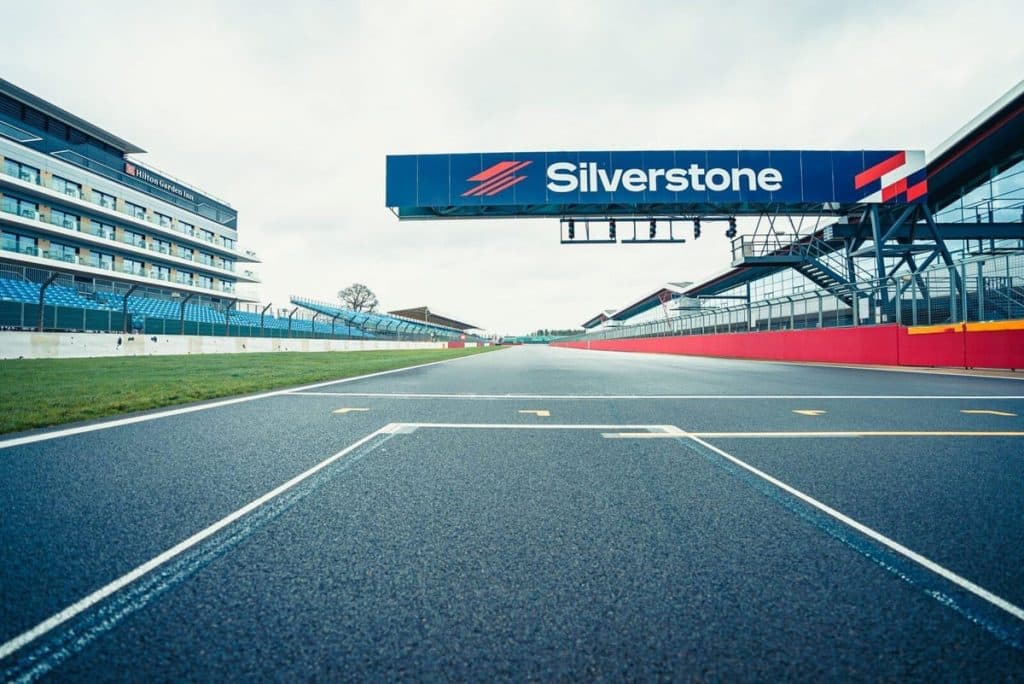
Nestled in the Northamptonshire countryside, surrounded by villages and farmland, Silverstone has become synonymous with Formula One. It is where the Formula One World Championship officially began in 1950, where some of the sport's greatest champions have written their names into history, and where hundreds of thousands of fans gather each summer to celebrate the fastest racing cars on the planet.
Today, Silverstone is regarded as the spiritual home of Formula One. Yet its story began not with racing cars, but with bombers.
From RAF Airfield to Racing Circuit
Silverstone was built in 1943 as RAF Silverstone, a Royal Air Force bomber station during the Second World War. Like many wartime airfields, it consisted of three intersecting runways laid out in a triangular pattern, designed to allow aircraft to take off regardless of wind direction.
When peace returned in 1945, Britain was left with dozens of redundant military airfields. While many were abandoned or returned to farmland, racing enthusiasts saw opportunity.
In 1947, an informal race was organised using Silverstone's runways. Legend has it that one competitor collided with a sheep that had wandered onto the course, giving rise to the famous "Mutton Grand Prix" nickname. It was hardly the polished spectacle Formula One fans know today, but it demonstrated the site's potential.
Recognising its suitability, the Royal Automobile Club (RAC) took over the venue in 1948. Rather than racing on the runways themselves, organisers created a circuit using the perimeter roads that surrounded the airfield. The layout was fast, flowing and unlike anything Britain had previously seen.
Silverstone was ready for something much bigger.
The Day Formula One Was Born
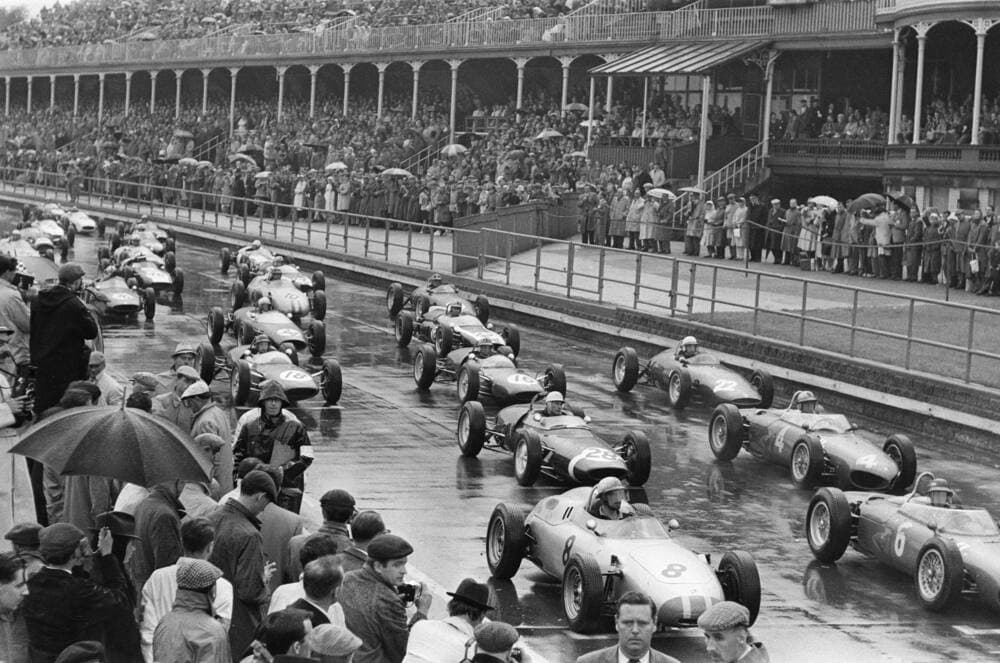
On 13 May 1950, motorsport history was made.
Silverstone hosted the first race of the inaugural FIA Formula One World Championship, marking the beginning of what would become the world's premier motorsport series.
The event attracted more than 100,000 spectators, an extraordinary crowd for post-war Britain. Even King George VI, Queen Elizabeth, Princess Margaret and other members of the Royal Family attended, making it the only Formula One World Championship race ever attended by a reigning British monarch.
Italy's Giuseppe "Nino" Farina, driving for Alfa Romeo, dominated the race to become Formula One's first Grand Prix winner. Later that season, he would also become the sport's first World Champion.
No one watching that afternoon could have imagined that they were witnessing the birth of a global sporting phenomenon.
The Circuit Evolves
Although the location has remained the same, Silverstone has changed dramatically over the decades.
The original circuit was breathtakingly fast. Drivers spent much of each lap at full throttle, with little protection should anything go wrong. As Formula One cars became faster and safety standards improved, the circuit underwent numerous redesigns.
Corners were re-profiled, new sections were added and run-off areas expanded. Yet despite these changes, Silverstone has always retained the characteristics that drivers love most—high-speed commitment, flowing sequences of corners and the need for supreme confidence.
Among its most famous corners are Copse, where drivers enter at astonishing speed; Maggotts and Becketts, regarded as one of the greatest combinations of corners in world motorsport; Stowe, a favourite overtaking opportunity; and Club Corner, leading cars back onto the Hamilton Straight.
Many drivers still describe a perfect lap around Silverstone as one of Formula One's greatest challenges.
Legends Made at Silverstone
Every era of Formula One has produced unforgettable moments at Silverstone.
Jim Clark dominated during the 1960s, his smooth driving style perfectly suited to the circuit's flowing nature.
Nigel Mansell produced one of British sport's most iconic moments in 1991. After Ayrton Senna ran out of fuel on the final lap, Mansell famously stopped his Williams and offered Senna a lift back to the pits on the sidepod of his car. The image remains one of Formula One's defining photographs.
In 1987, Mansell also thrilled the home crowd by chasing down teammate Nelson Piquet and overtaking him in one of the greatest British Grand Prix victories ever witnessed.
Then came the era of Lewis Hamilton.
Hamilton has rewritten the Silverstone record books, becoming the most successful driver in the history of the British Grand Prix with multiple victories at the circuit. His emotional win in 2008, mastered in torrential rain, is widely regarded as one of the finest wet-weather drives in Formula One history. Years later, his dramatic victory in 2024—his first Grand Prix win since 2021—ended a long wait and delighted the home crowd.
Silverstone has always had a way of producing unforgettable stories.
The Fans Who Make the Difference
Ask almost any Formula One driver about Silverstone and they will mention the supporters.
British motorsport fans are among the most knowledgeable anywhere in the world. They arrive days before the race, camp around the circuit and create an atmosphere that few sporting events can match.
Unlike some newer Formula One venues built primarily for spectacle, Silverstone feels authentic.
Generations of families return year after year. Many have watched legends such as Jackie Stewart, James Hunt, Nigel Mansell, Damon Hill, Jenson Button and Lewis Hamilton race on the same circuit.
It is more than a Grand Prix.
It is a national sporting occasion.
More Than Just Formula One
Silverstone is far more than a Formula One venue.
Throughout the year it hosts MotoGP, the British Touring Car Championship, endurance racing, historic festivals and countless club events.
The circuit has also developed into a major centre for automotive technology, engineering and education, sitting at the heart of Britain's famous "Motorsport Valley", where many Formula One teams and specialist engineering companies are based.
This unique ecosystem has helped Britain become the world's leading nation in motorsport innovation.
Safety and Innovation
Like Formula One itself, Silverstone has continually evolved to improve safety.
The circuit has expanded run-off areas, installed modern barrier technology and upgraded medical facilities while preserving the fast, flowing characteristics that define it.
Drivers now reach speeds approaching 200 mph around parts of the circuit, yet thanks to decades of innovation, the risks are significantly lower than those faced by the pioneers of the 1950s and 1960s.
Silverstone reflects Formula One's broader journey—constantly pushing the limits of performance while never standing still in the pursuit of safety.
Why Silverstone Still Matters
Formula One now races beneath the lights of Singapore, through the streets of Monaco, alongside the casinos of Las Vegas and beneath the skyscrapers of Abu Dhabi.
Yet ask many within the paddock which race truly feels like Formula One, and the answer is often the same.
Silverstone.
It is where the championship began. It is where history lives in every corner. It is where generations of champions have tested themselves against one of the world's greatest circuits.
Modern Formula One may be a billion-pound global business, but every championship can trace its roots back to one former RAF airfield in rural England.
The Sports Lounge Verdict
Silverstone is more than Britain's Grand Prix circuit. It is the birthplace of Formula One itself.
For more than 75 years it has witnessed the evolution of the world's fastest racing cars, celebrated the greatest drivers of every generation and provided moments that have become woven into sporting folklore. From Giuseppe Farina's victory in the inaugural World Championship race to Lewis Hamilton's record-breaking success in front of his home fans, Silverstone has remained at the very heart of Formula One.
Its story is not simply about speed or technology. It is about innovation born from a wartime airfield, the passion of generations of supporters and a circuit that continues to define the very essence of Grand Prix racing.
As Formula One continues to expand across the globe, Silverstone serves as a reminder that every great sporting journey has a beginning.
For Formula One, that beginning was here.
Sports Lounge Editorial
The Sports Lounge editorial team
The Sports Lounge editorial team brings together writers, former professionals and analysts who believe sport deserves thoughtful, considered conversation.