For more than 75 years, Formula One has been far more than a motor racing championship. It has become a showcase of engineering excellence, human courage, commercial ambition and technological innovation. Every Grand Prix is a contest between the world's finest drivers, some of the most advanced machines ever created, and teams willing to spend hundreds of millions of pounds searching for the smallest competitive advantage.
Today, Formula One is watched by hundreds of millions of fans across the globe, races on five continents and generates billions in annual revenue. Yet its origins were remarkably modest.
This is the story of how Formula One became the pinnacle of motorsport.
Where It All Began
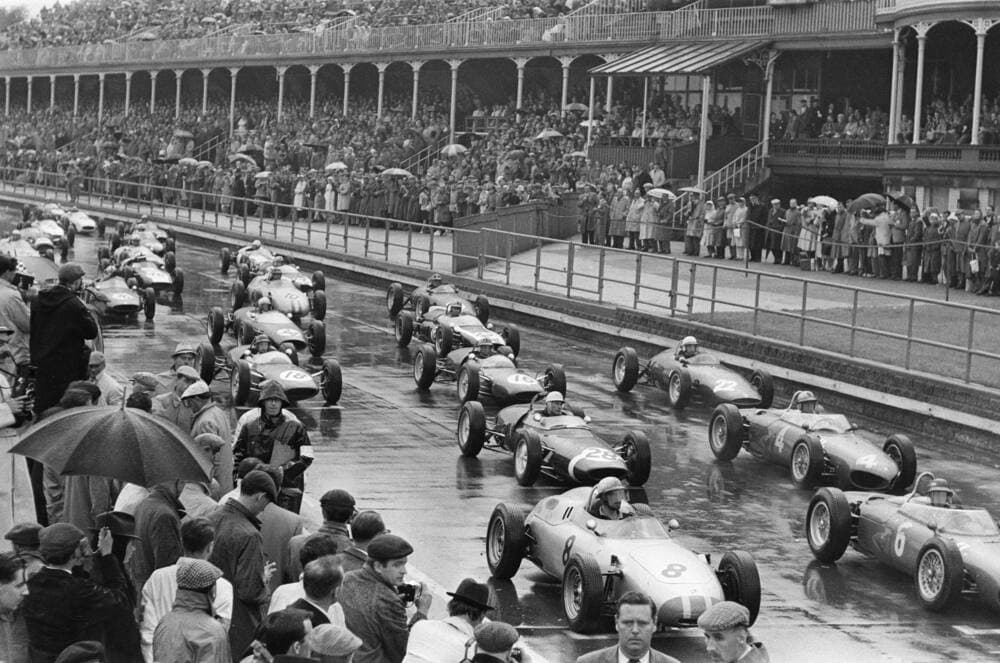
Although Grand Prix racing stretches back to the early 1900s, Formula One officially began on 13 May 1950, when the inaugural World Championship race was held at Silverstone in England. Italy's Giuseppe "Nino" Farina won the race driving an Alfa Romeo before going on to become Formula One's first World Champion.
The early championship featured just seven rounds, including the Indianapolis 500, which counted towards the World Championship between 1950 and 1960 despite featuring almost entirely different competitors.
The first decade belonged largely to two men.
Farina opened the history books, but Argentina's Juan Manuel Fangio quickly established himself as the sport's first true legend. Winning five World Championships between 1951 and 1957, Fangio's record remained untouched for almost half a century. Driving for Alfa Romeo, Maserati, Mercedes-Benz and Ferrari, he proved greatness was about talent rather than machinery alone.
Danger Was Simply Accepted
Modern Formula One is one of the safest forms of motorsport in the world.
That was certainly not the case during its early decades.
Drivers raced wearing open-face helmets, cotton overalls and with virtually no meaningful crash protection. Fuel tanks surrounded the cockpit, barriers were primitive and medical facilities were basic by modern standards.
The 1960s and 1970s became infamous for tragedy. Talented drivers including Jim Clark, Jochen Rindt, Piers Courage, François Cevert, Ronnie Peterson and many others lost their lives pursuing victory.
Perhaps no figure changed Formula One more than three-time World Champion Sir Jackie Stewart, who campaigned relentlessly for improved circuit safety despite criticism from some competitors. His efforts transformed attitudes across motorsport and laid the foundations for the safety standards seen today.
The deaths of Roland Ratzenberger and three-time World Champion Ayrton Senna during the 1994 San Marino Grand Prix marked another turning point, leading to sweeping changes in car design, circuit layouts and medical procedures that dramatically improved driver survival.
Engineering Becomes the Star
While drivers remain Formula One's heroes, the sport has always been equally about engineering.
The cars evolved from front-engined machines producing around 350 horsepower into rear-engined technological masterpieces producing well over 1,000 horsepower in modern hybrid form. Aerodynamics, lightweight materials, sophisticated suspension systems and computer modelling have continually pushed the boundaries of what is possible.
Ground effect revolutionised the late 1970s before being restricted.
Carbon fibre transformed safety during the 1980s.
Semi-automatic gearboxes changed driving forever.
Hybrid power units arrived in 2014, combining turbocharged V6 engines with advanced energy recovery systems, making Formula One one of the world's most technologically efficient racing series.
Many innovations first developed for Formula One eventually found their way into everyday road cars, including advances in braking systems, lightweight materials, engine efficiency and hybrid technology.
The Great Teams
Some names have become inseparable from Formula One history.
Ferrari has competed in every Formula One World Championship since 1950, making it the only team to have participated continuously throughout the sport's history. It remains the championship's most iconic constructor.
McLaren arrived in the 1960s and developed into one of the sport's greatest teams through drivers such as Emerson Fittipaldi, James Hunt, Alain Prost, Ayrton Senna, Mika Häkkinen and Lewis Hamilton.
Williams dominated much of the 1980s and 1990s through engineering brilliance.
Lotus changed racing forever through aerodynamic innovation.
Mercedes has defined the hybrid era.
Red Bull Racing became the dominant force of the 2010s and early 2020s through exceptional technical leadership.
The Constructors' Championship itself was only introduced in 1958, recognising that Formula One is ultimately a contest between teams as much as drivers.
The Greatest Drivers
Every generation believes it has witnessed Formula One's finest driver.
Fangio established the benchmark.
Jim Clark displayed breathtaking natural talent.
Jackie Stewart combined speed with intelligence.
Niki Lauda demonstrated extraordinary determination by returning just weeks after suffering life-threatening burns in 1976.
James Hunt became the charismatic champion of the 1970s.
Alain Prost mastered strategy.
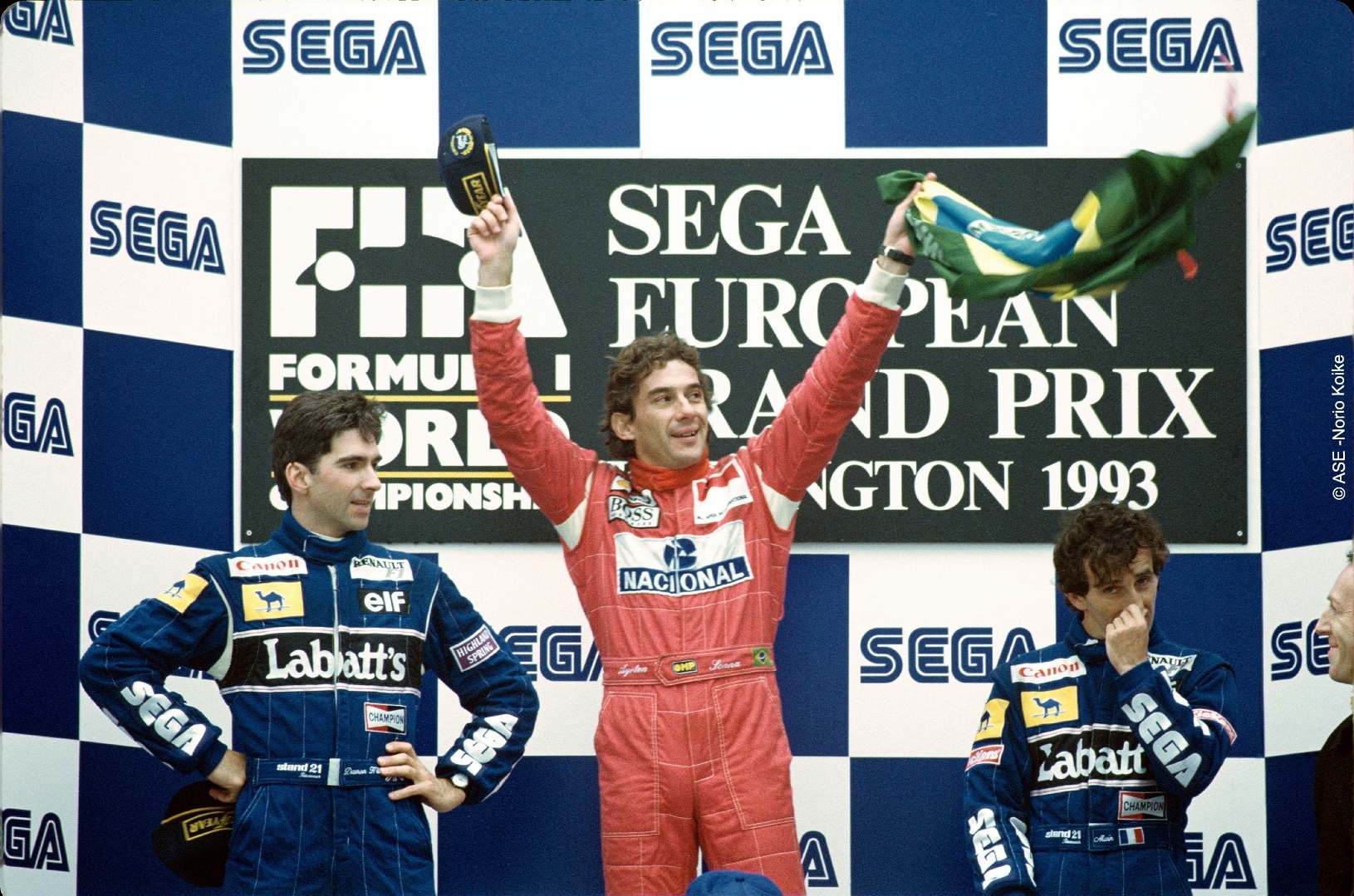
Ayrton Senna inspired millions with his speed in wet conditions and qualifying brilliance.
Michael Schumacher redefined professionalism, winning seven World Championships and transforming Ferrari into the dominant team of the early 2000s.
Lewis Hamilton matched Schumacher's seven world titles while becoming Formula One's most successful driver in terms of race victories and pole positions, helping broaden the sport's global appeal.
Max Verstappen has become the defining driver of the current generation, demonstrating extraordinary consistency, racecraft and outright pace.
Each era has produced champions shaped by different regulations, technologies and levels of competition, making comparisons almost impossible—but endlessly fascinating.
Formula One Becomes Big Business
The sport transformed dramatically during the commercial revolution led by Bernie Ecclestone.
Beginning in the 1970s, Ecclestone centralised television rights, negotiated global broadcasting deals and turned Formula One from a collection of races into a worldwide entertainment product.
The result was enormous.
Today, Formula One visits more than 20 countries annually, attracts global sponsors including luxury brands, technology companies and financial institutions, and generates billions through media rights, sponsorship and race promotion.
Modern teams employ hundreds, sometimes more than a thousand, specialists across engineering, aerodynamics, software development, logistics, strategy and manufacturing.
The sport is now owned by Liberty Media, which acquired Formula One in 2017 and has focused heavily on expanding digital engagement, social media and younger audiences.
A Global Audience Like Never Before
Formula One's popularity has surged during the past decade.
The success of Netflix's Drive to Survive introduced millions of new fans by revealing the personalities, rivalries and pressures behind the paddock.
Social media has transformed drivers into global celebrities, while races in Las Vegas, Miami, Singapore, Saudi Arabia and Abu Dhabi have strengthened Formula One's presence in new markets.
Traditional European circuits such as Silverstone, Monza, Spa-Francorchamps and Monaco remain the emotional heart of the championship, but Formula One is now genuinely global.
The championship regularly attracts television audiences numbering in the hundreds of millions across a season and continues to grow commercially.
Technology Versus Competition
One criticism has followed Formula One throughout its history.
Has technology become too important?
Because Formula One is fundamentally an engineering championship, the fastest car often enjoys a significant advantage. Periods of dominance by Ferrari, Red Bull, Mercedes and McLaren have prompted frequent regulation changes designed to improve overtaking and competitive balance.
The FIA regularly introduces new technical rules to reduce costs, encourage closer racing and improve sustainability.
The next major technical era, introduced from 2026, places even greater emphasis on sustainable fuels and new hybrid technology, reflecting Formula One's ambition to remain relevant in an evolving automotive industry.
Why Formula One Still Matters
Formula One represents something unique.
It is where human bravery meets scientific innovation.
Where milliseconds decide championships.
Where strategy is as important as speed.
Every Grand Prix is effectively a travelling engineering competition involving thousands of people working behind the scenes to help two drivers perform for little more than 90 minutes on a Sunday afternoon.
Very few sports combine athletic excellence, cutting-edge technology, business, politics, psychology and international prestige quite like Formula One.
The Sports Lounge Verdict
Formula One has travelled an extraordinary road since those first cars lined up at Silverstone in 1950.
What began as a European championship contested by a handful of manufacturers has become one of the world's biggest sporting spectacles. It has survived tragedy, embraced innovation, created legends and continually reinvented itself for new generations.
The names may change—from Fangio to Clark, Stewart to Senna, Schumacher to Hamilton, Verstappen and beyond—but the essence remains the same.
Twenty drivers.
One grid.
One World Championship.
For over seven decades, Formula One has represented the absolute pursuit of perfection. Few sports demand so much from both man and machine, and perhaps that is why millions continue to be captivated every time the lights go out.
It is not simply motor racing.
It is the pinnacle of motorsport.
Sports Lounge Editorial
The Sports Lounge editorial team
The Sports Lounge editorial team brings together writers, former professionals and analysts who believe sport deserves thoughtful, considered conversation.